
3 More Montessori Myths That Are Misleading Parents…


Katie, our wonderful Infant and Toddler Montessori teacher, created a Part 2 of this blog post: 3 Montessori Myths That Are Misleading Parents…
We wrote this post because social media OFTEN misrepresents what Montessori is.
- It's not a playroom aesthetic.
- It's not all about rigorous academics or pushing children academically.
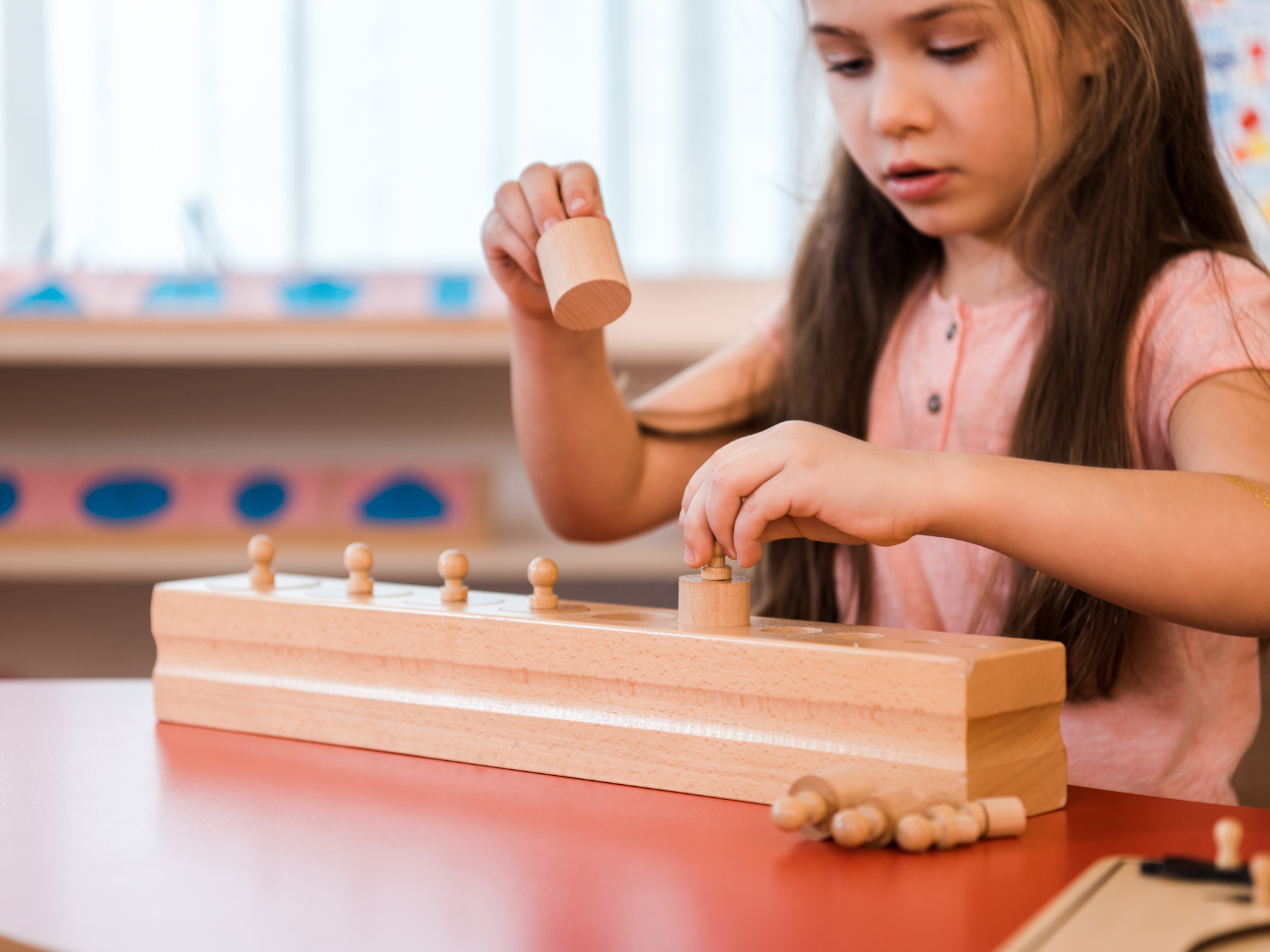
- And it's definitely not all wooden toys.
It's an educational approach meant to develop a child's love of learning, independence, and confidence.
If you haven't read the first post, I highly suggest you check it out: https://themontessoriroom.com/blogs/montessori-tips/3-montessori-myths-that-are-misleading-parents
1. Children Don’t Make Friends
Some people have this strange idea that children work only quietly and independently in the Montessori classroom, leaving little opportunity for social development.
This is simply not true at all. Montessori classrooms encourage social interaction, collaboration, and friendships.
Unlike traditional classrooms, Montessori students aren’t confined to one age group (Casa is for children 3 - 6 years old, Lower Elementary is for children 6-9 years old, and Upper Elementary is for children 9-12 years old), so they’re often in mixed-age classrooms, allowing older children to mentor younger ones and vice versa.
The teachers will often present activities to small or large groups and have a daily circle time, helping to facilitate the children’s social interactions in the classroom.
It is true that there is a strong focus on independence and independent work in Montessori, but children are welcome to work together, helping them to develop:
- social skills
- empathy
- mutual respect
as they interact and work together on projects and activities.
2. Children Aren’t Allowed to Talk
Children in Montessori environments ARE allowed to talk, but they’re encouraged to respect the focus of others.
Montessori classrooms teach "grace and courtesy" skills, which include learning how to respectfully get someone’s attention (including the teacher and other children) rather than raising their voice or interrupting, how to invite classmates to work with them, how to work independently or in a group quietly to avoid disrupting the others and more.
This approach fosters a respectful, peaceful environment where children can practice both independent work and social interaction.
Montessori classrooms do tend to be quiet, and every once in a while the voices will become completely silent as the children settle into their work, but it’s not long before a question is asked or conversation starts somewhere.
What you’re seeing when you observe a Montessori classroom where the children aren’t speaking is children deeply focused on their work, children who have had their concentration protected, allowing it to develop, because they’ve all learned how to be respectful of others in the classroom.
Montessori classrooms teach "grace and courtesy" skills, which include learning how to respectfully get someone’s attention (including the teacher and other children) rather than raising their voice or interrupting, how to invite classmates to work with them, how to work independently or in a group quietly to avoid disrupting the others and more.
This approach fosters a respectful, peaceful environment where children can practice both independent work and social interaction.
Montessori classrooms do tend to be quiet, and every once in a while the voices will become completely silent as the children settle into their work, but it’s not long before a question is asked or conversation starts somewhere.
What you’re seeing when you observe a Montessori classroom where the children aren’t speaking is children deeply focused on their work, children who have had their concentration protected, allowing it to develop, because they’ve all learned how to be respectful of others in the classroom.
"The first essential for the child's development is concentration. It lays the whole basis for his character and social behaviour." - Dr. Montessori, The Absorbent Mind
3. Montessori Stifles Creativity
The idea that Montessori "stifles creativity" often comes from a misunderstanding of its structured approach.
In Montessori, creativity is viewed as a natural part of the child’s development, which emerges through exploration, problem-solving, and engaging with real-world activities.
While it is true that many of the materials in Montessori classrooms are designed to be used in a specific way, the child has the freedom to explore the materials as long as they are being respectful of the materials, the classroom and themselves.
They have the freedom to explore within limits.
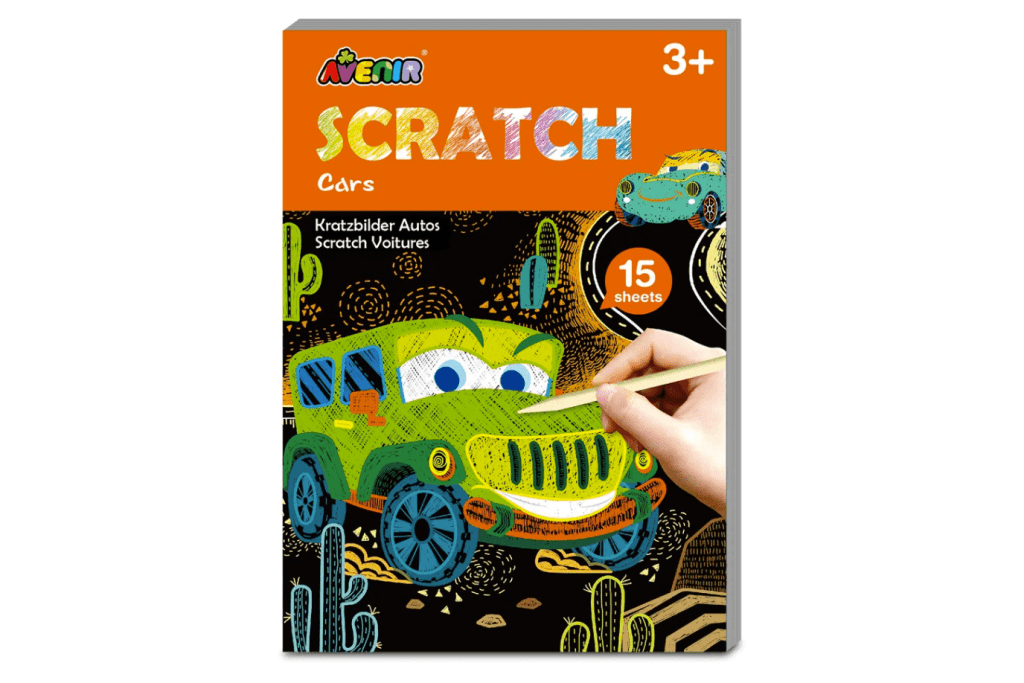
Montessori classrooms also have art areas where the focus is on the process rather than the product. The children are provided with a variety of art materials and are free to explore and create with them.













![Kidamento Kidamento Children's Cameras [3 Models]](http://themontessoriroom.com/cdn/shop/products/kidamento-childrens-cameras-3-models-661353.png?v=1699075281&width=1600)
![Kidamento Kidamento Children's Cameras [3 Models]](http://themontessoriroom.com/cdn/shop/products/kidamento-childrens-cameras-3-models-661353_2000x.png?v=1699075281)

