
How To Teach your Child About Road Safety - 5 Steps


Now that the weather is a little nicer, it’s a perfect time to talk to your child about road safety.
Yes, when they’re little, the rule should be that they don’t cross the street without an adult or holding someone's hand, but they are inevitably going to grow and start walking places by themselves.
So the most effective way to teach children about road safety is to start when they are young.
Like most learning in Montessori, you simply need to break it down into steps.
1. Narrate what you’re doing.
When out for a walk, talk to your child about what you’re doing and why:
- "We stop here because the light is red and the stop symbol is on. We have to wait for the walking symbol to come on before we can cross the road."
- "I’m looking both ways before I cross the street to make sure no cars are coming."
- "We’re approaching a driveway (or an alley), I’m going to stop here and make sure no cars are coming before I continue."
- "I’m waving at the driver to make sure they see us before we cross the road."
2. Point out road signs, traffic lights and pedestrian crossings when out and about.
Young children learn best through repetition and observation, so talking about what you see around your neighbourhood helps make these concepts familiar and meaningful.
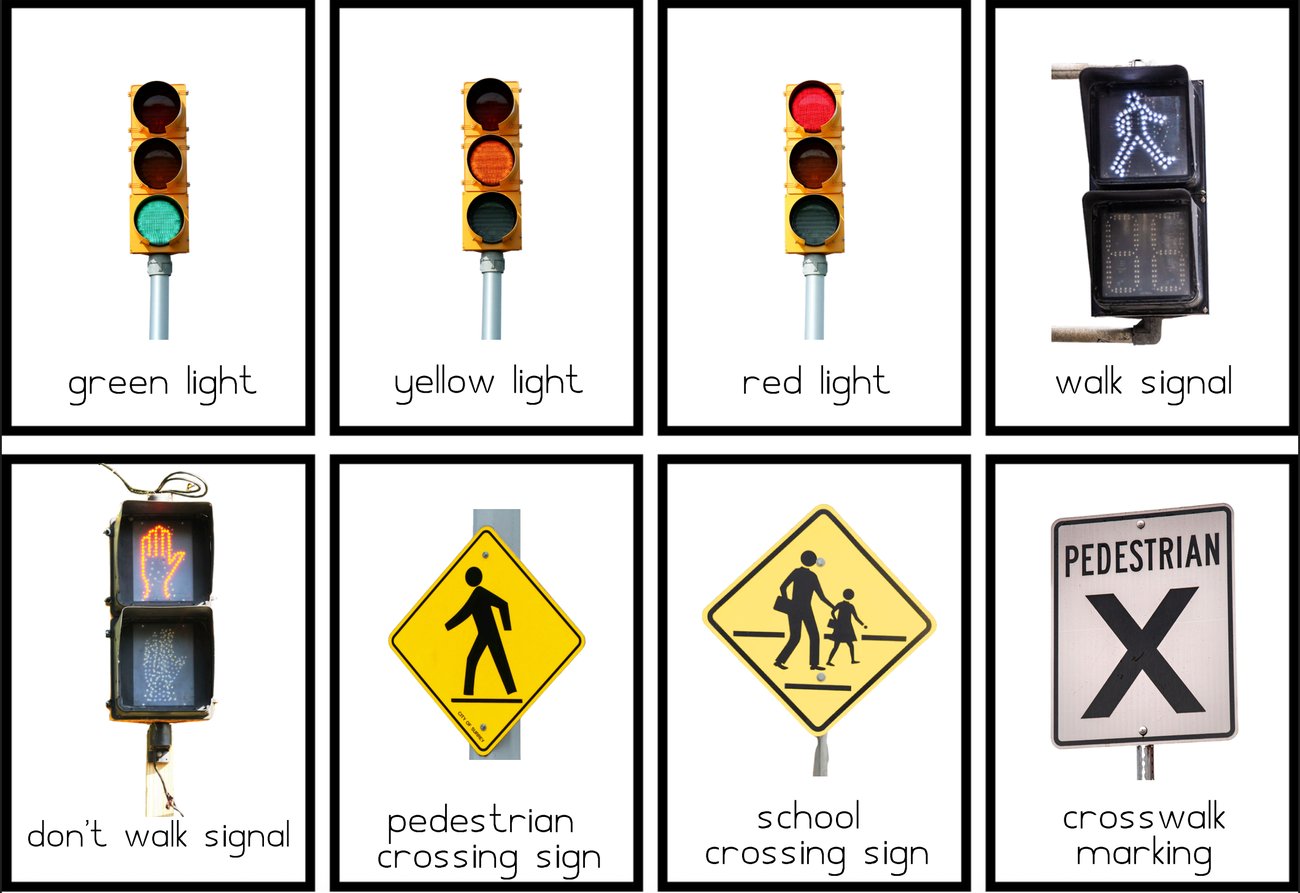
You may also want to do this Neighbourhood Road Signs Activity.
3. Practice crossing the street.
When your child starts walking, make a point of practicing how to cross the street together.
Here are the steps:
- Stop at the curb.
- Look left.
- Look right.
- Look behind you and in front of you for turning cars.
- Keep watching while you cross.
4. Avoid jaywalking.
The reality is that if you jaywalk with your child, they’re likely going to do it when walking on their own.
I understand that jaywalking is much more convenient most times, we all do it, but just keep this in mind.
If you jaywalk with your child, you must explain to them repeatedly how important it is to make sure no cars are coming. Talk about how even some cars that look far away might be driving fast, to look for cars that may be turning on to the road and so on.
5. Practice walking routes.
When your child gets to an age where they could start walking places on their own or are granted permission at school to leave the property, practice the different routes they may take.
- The first few times, walk together.
- After they’ve become more familiar with the route(s), walk a few feet behind them.
- When you think they’re ready to start crossing the road on their own, introduce it in a way that’s comfortable to you, whether that’s crossing first and waiting on the other side, or allowing them to cross first while you follow behind.
- Gradually increasing independence over time can help children build confidence, awareness, and good road safety habits.
Additional road safety tips
- Encourage children to remove distractions like headphones or phones while walking.
- Point out hidden driveways, parking lot exits, and turning vehicles.
- Practice routes in different weather conditions and at different times of day.
- Remind your children to make eye contact with drivers before crossing.
- Talk through what to do if something unexpected happens, such as construction or a blocked sidewalk.
- Encourage children to stay aware of cyclists and scooters, not just cars.
- Choose familiar, consistent routes while children are still learning.














![Kidamento Kidamento Children's Cameras [3 Models]](http://themontessoriroom.com/cdn/shop/products/kidamento-childrens-cameras-3-models-661353.png?v=1699075281&width=1600)
![Kidamento Kidamento Children's Cameras [3 Models]](http://themontessoriroom.com/cdn/shop/products/kidamento-childrens-cameras-3-models-661353_2000x.png?v=1699075281)

