
Easing Into Fall as a "Prepared Adult"


As we enter another transitional period, with the weather changing and school starting, becoming a "prepared adult" can make the transition smoother.
In Montessori, the "prepared adult" is just as important as the "prepared environment".
Now technically, the "prepared adult" is a formally-trained Montessori teacher who has studied child development and the Montessori Method.
Through their training they develop an understanding of:
- how children naturally learn
- how to observe and respond to each individual child
- how to introduce materials appropriately
- how to prepare an environment that supports independence
At home, parents can be “prepared adults” by:

1. Being curious about your child. Take time to observe what they’re doing, what they’re interested in, and what skills they’re working on.
2. Looking at the spaces your child spends time in. Is the space engaging? Overwhelming? Can they move around? Are their toys accessible?
3. Invite your child to participate in practical life activities - where appropriate, once interested.
When your toddler starts showing an interest in helping to tidy up or prepare food, look for ways to invite them in.
You can do this by breaking tasks down into manageable steps and providing them with the right sized tools. Maybe they’re not ready to help chop the fruits for the fruit salad, but could they help to wash the fruit first?
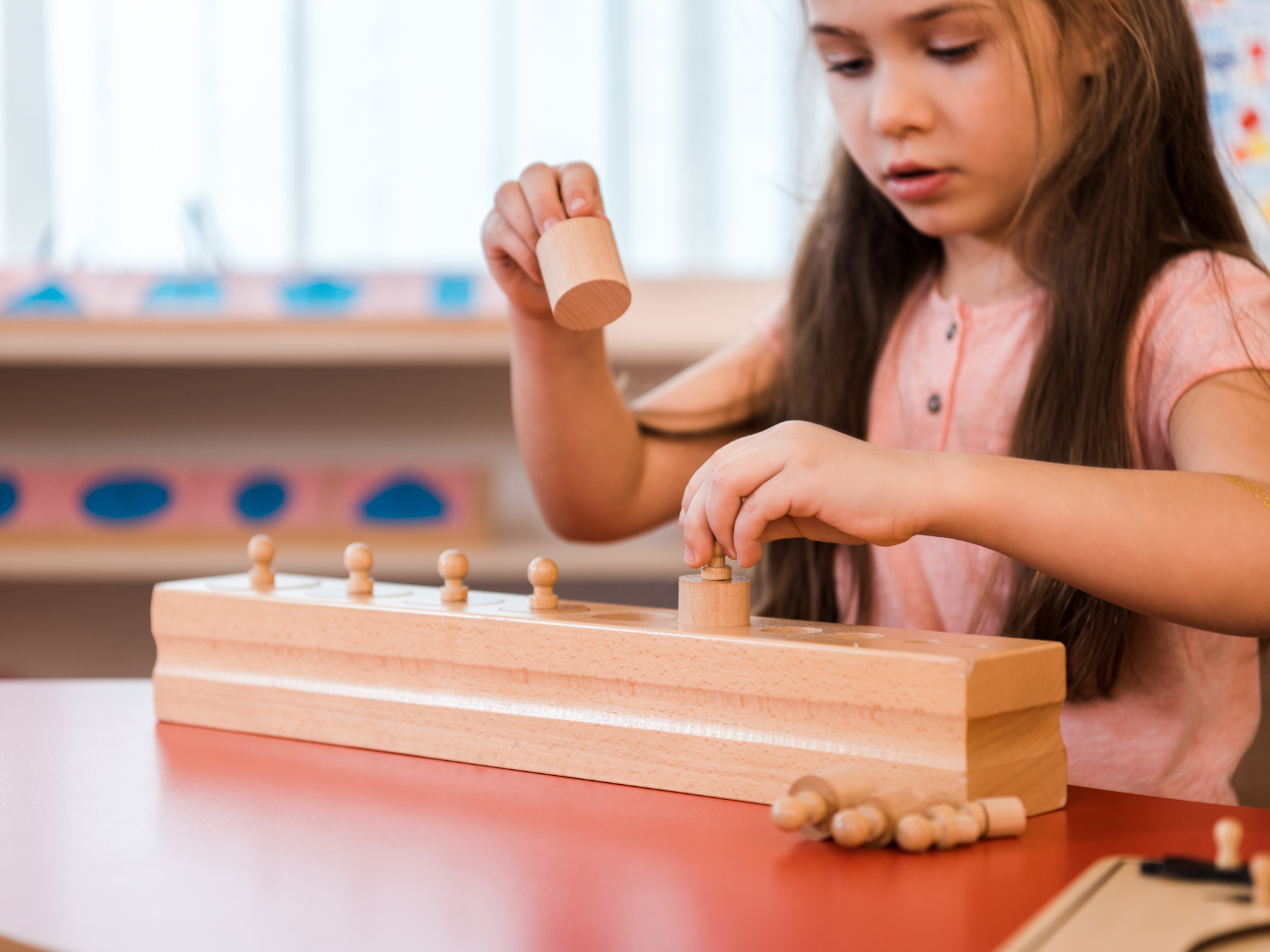
4. Slowing down and interfering less. When a child is focused on a task or working hard on a new skill, give them time.
Montessori teachers learn a lot about the importance of protecting a child’s concentration, so, when possible, try to avoid interrupting them when you see them concentrating.
The same idea applies when you see them working through a challenge. A challenge can be motivating, so if you see your child struggling with a task, wait until they ask for help or are showing signs of frustration before offering assistance.
5. Allowing children as much freedom and independence as is appropriate, while setting reasonable, consistent boundaries where needed.
Children need opportunities to make choices and explore independently, but they also rely on adults to provide clear limits that keep them safe and help them understand what is expected.
6. Trusting your child’s development.
Remember that your child is learning and discovering so much every day. Every child develops at their own pace, so try to avoid comparing them to others or becoming overly focused on what they “should” be doing by a certain age.
Montessori teachers are taught to “look for the child who is not yet there.” This doesn’t mean we aren’t recognizing or appreciating the child in front of us today, it just reminds us that the child will grow, change and learn. We can support them where they are today while trusting that the next stage will come in time.
For parents interested in learning more, I’d recommend Simone Davies’ books or Montessori from the Start by by Paula Polk Lillard and Lynn Lillard Jessen.
Our at-home program is also a great way for parents to learn how to become a “prepared adult.” It gives you guidance on how to introduce activities “the Montessori way,” while helping you learn how to follow your child’s lead and support their development. Check it out here: https://info.













![Kidamento Kidamento Children's Cameras [3 Models]](http://themontessoriroom.com/cdn/shop/products/kidamento-childrens-cameras-3-models-661353.png?v=1699075281&width=1600)
![Kidamento Kidamento Children's Cameras [3 Models]](http://themontessoriroom.com/cdn/shop/products/kidamento-childrens-cameras-3-models-661353_2000x.png?v=1699075281)

