
5 Bird Watching Activities for Young Children


Spring is a great time for birdwatching.
With the change in season and arrival of warmer temperatures, migratory birds return to their breeding grounds, some of them from really far away.
Some of our most colourful birds spend their winters in Costa Rica, like the Ruby-Throated Hummingbird.
Imagine those tiny little birds flying so far every year?
Some Turkey Vultures migrate from as far as Argentina and there are lots of little warblers that fly here from the tropics or Amazon rainforest.
In Spring, these birds all return to build their nests and find a mate.
Dr. Montessori had a deep respect for nature.
“There is no description, no image in any book that is capable of replacing the sight of real trees, and all the life to be found around them, in a real forest... The wood reveals that it is not only the trees that exist, but a whole, interrelated collection of lives.”
- Dr. Montessori, From Childhood to Adolescence
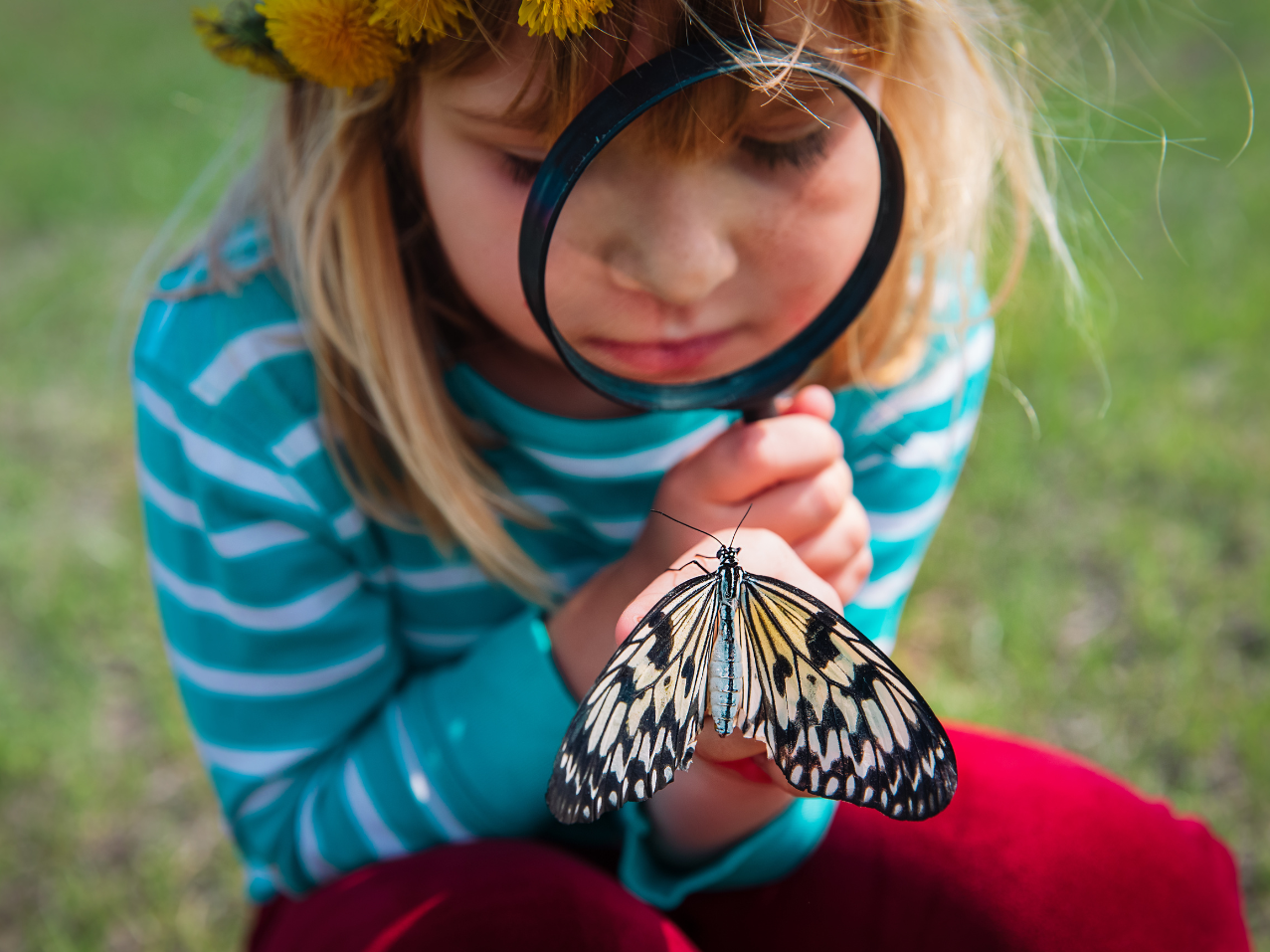
Birdwatching is a wonderful way to help children connect with the natural world and deepen their curiousity around it.
5 Bird Watching Activities for Young Children
1. Go for a walk in your neighbourhood

Take a slow walk and look and listen for birds as you go. Encourage children to notice where birds are, on rooftops, in trees, on fences, or flying overhead.
Bring these Nomenclature Cards along or our Bird Scavenger Hunt so children can try to match what they see with the pictures.
2. Hang a bird feeder, or make one
Observe the birds that come for a snack.
Setting up a bird feeder helps children observe birds up close in a familiar space. You can talk about what birds like to eat and watch which birds come at different times of day.
You can make a really simple one with just an orange, spoon, twine, bird seed and a knife (adult use only).
Steps:
1. Cut an orange in half and scoop out the inside, leaving just the peel as a bowl.
2. Poke three or four small holes around the rim and thread twine through each hole, tying the strings together at the top to hang it.
3. Fill the orange cup with bird seed.
4. Hang the feeder on a tree branch where it’s easy for your child to observe visiting birds.
Add a pair of binoculars to get a closer look!

3. Add a bird bath to your backyard
A shallow bird bath gives birds a place to drink and clean their feathers. Children can observe how birds visit not just for food, but also for water. You might notice different behaviours like splashing, drinking, or quick visits before flying away.
4. Plant a bird-friendly garden
Choose plants, shrubs, or trees that provide seeds, berries, or shelter. Over time, children can observe how the garden changes through the seasons and how different birds are attracted to different plants.
5. Use the Merlin Bird ID app (developed by Cornell) to identify birds by their songs and sounds

This app can help you identify birds by listening to their calls and songs. Children can try pressing record and waiting quietly to see what birds are nearby.
It turns listening into a fun discovery game and helps build awareness of sounds in nature, not just what we can see.
10 Interesting Facts to Share About Birds While you’re out Birdwatching:
-
Birds have hollow bones - Many birds have hollow bones, which makes them lighter and helps them fly.
-
Feathers are very important - Birds use their feathers not just for flying, but also to stay warm, stay dry, and even to attract mates.
-
Not all birds in Canada fly south for winter - Some birds, like chickadees and owls, stay in Canada all winter and are specially adapted to survive the cold.
-
Canada geese fly in a “V” shape - When Canada geese migrate, they fly in a V formation. This helps them save energy and stay together as a group.
-
Birds don’t have teeth - Instead of teeth, birds use their beaks to pick up, tear, or crack their food. Different birds have different shaped beaks depending on what they eat.
-
Baby birds grow very quickly - Many baby birds grow from tiny hatchlings to almost full size in just a few weeks.
-
Birds communicate in many ways - Birds don’t just sing, they also use calls, body movements, and even feather displays to communicate.
-
Many birds travel at night - Some Canadian birds, usually small songbirds, migrate at night to avoid predators and warmer temperatures. Warm air can cause turbulence for the birds as they fly.
-
Some birds raise many families in one season - Most birds raise just one group of babies each year. But some birds, like the American Robin, may lay eggs and raise babies 4 or even 5 times in a single breeding season, sometimes using a new nest each time.
- Canada is an important stop for migrating birds - Because of its forests, lakes, and wetlands, Canada provides lots of safe places for birds to rest, eat, and raise their young during migration. Millions of birds travel through Canada each year on their journeys.
A Good Reminder For Children AND Adults

When out bird watching, remember that you are visiting the homes of these animals.
While they are resilient, we have to treat them with respect.
It’s tempting to chase birds to see them fly or, if you’re lucky to spot one, try to wake a sleeping owl in a tree, but these actions can be harmful to the birds.
Young children can learn how to observe respectfully, i.e. quiet voices, calm movements.
And for children that are showing an interest in birds, you might also want to check out one of our best-sellers, The Little Book of Backyard Bird Songs.











![Kidamento Kidamento Children's Cameras [3 Models]](http://themontessoriroom.com/cdn/shop/products/kidamento-childrens-cameras-3-models-661353.png?v=1699075281&width=1600)
![Kidamento Kidamento Children's Cameras [3 Models]](http://themontessoriroom.com/cdn/shop/products/kidamento-childrens-cameras-3-models-661353_2000x.png?v=1699075281)

