
3 Very BIG Differences Between Montessori and Other Schools…


There are three main aspects of Montessori school that are different from traditional school and childcare.
Some of these do happen in other childcare settings, but they are universal in all Montessori classrooms.
1. Independence
In a Montessori school, children are taught how to:
- dress themselves
- change their shoes
- feed themselves
- set their own table
- clean up after themselves
This may sound harsh when reading in a list like this...

BUT Montessori focuses so much on independence because Dr. Montessori found that not only are children capable of these things, but they want to do them for themselves.
To be clear, children are never pushed in a Montessori school to do things independently.
The environment is designed to foster a child’s growing desire for independence and the teachers follow the child’s lead.
How parents can support this in the home:
- Look for opportunities to encourage your child’s independence at home. For example: If they’re working on taking off their shoes independently at school, give them some extra time to take off their shoes when arriving home.
- If you have a chance to tour your child’s classroom, look for all the different ways it’s set up so that children can work on practical life skills, like self-care tasks on their own. You’ll notice there are low hooks where they can hang their jackets, accessible sinks to wash their hands, a child-sized broom and mop hanging on the wall to clean up any spills, etc. You don’t need to completely transform your home into a Montessori classroom, but if your child is starting to show an interest in doing something independently at home, figure out how you can make it more accessible for them.
2. Turn-Taking Instead of Sharing
In a Montessori school, children are NOT taught to share.
Instead, they’re taught how to take turns. When a child is working with a material, they are allowed to work with it for as long as they like. If another child wants to work with the same material, they learn to wait until the material is returned to the shelf.
There are a few important reasons for this:

- Sharing doesn't come naturally for children under the age of 3. Sharing involves a lot of emotional and social skills, such as understanding another person’s feelings and perspective, which are skills that are still developing at this age.
- Children develop and strengthen their concentration skills when they are allowed to work with a material for as long as they want.
- Children learn that the classroom is a shared space and they are part of a community. Out in the world, you don’t just take something because you want it. By focusing on turn-taking instead of sharing, children learn patience, respect for others and how to manage their own feelings while waiting.
How parents can support this at home:
- Model turn-taking in play, daily routines, etc. For example: Take turns choosing what song to listen to next, take turns placing the blocks to build a tower, take turns deciding what game to play, etc. Cooperative board games are a great way to naturally introduce turn-taking, and they make them for children as 2 years old - click here to see our best-selling cooperative games.
- In situations where there are communal toys to be shared, like at the playground, gently remind your child to wait their turn and use polite requests. If conflicts happen, help them express their feelings and suggest taking a break until their turn.
Waiting for a turn can be challenging for some children so do your best to support them as they learn.
3. Concentration
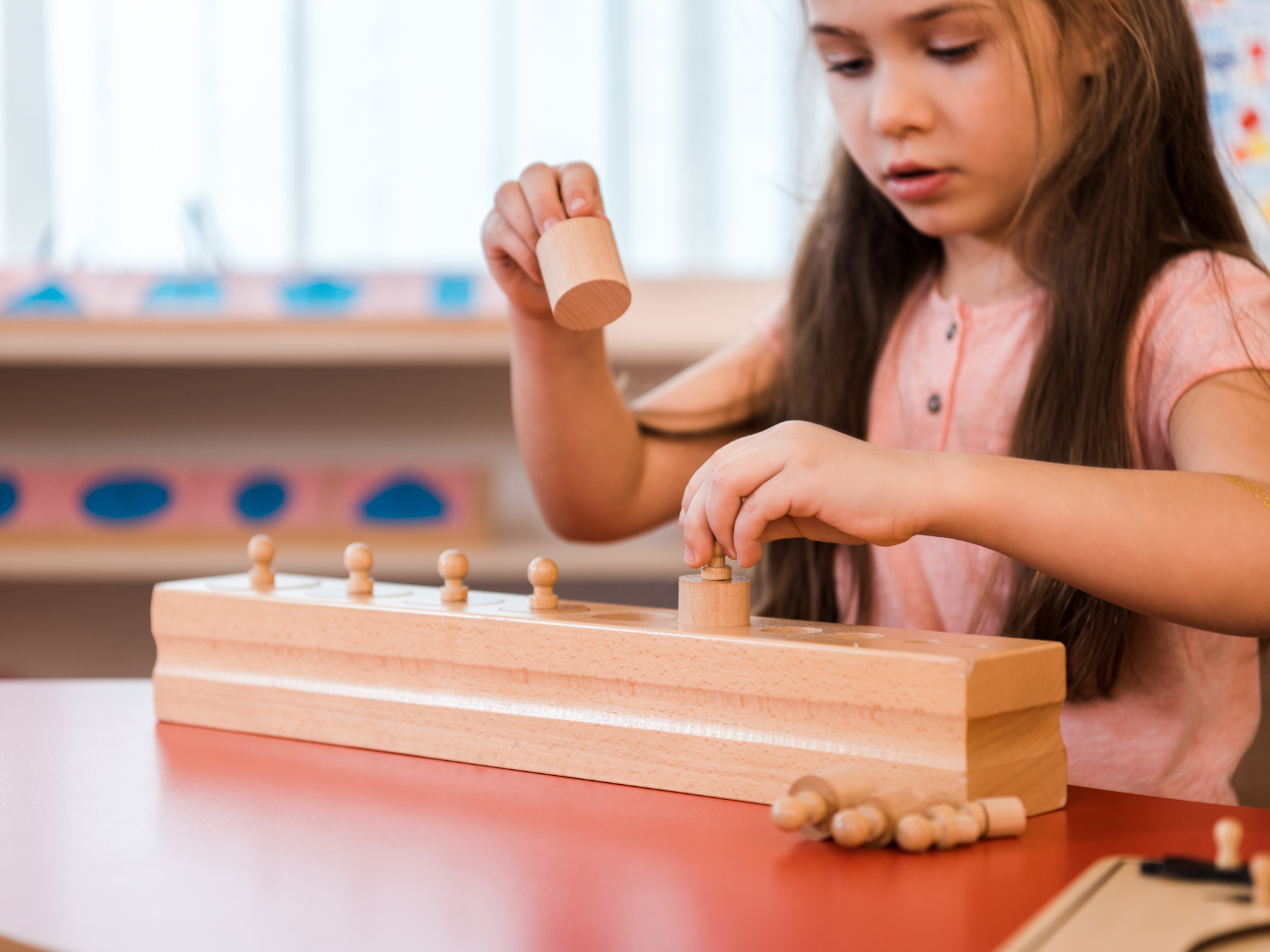
In a Montessori school, each child’s developing concentration is carefully protected by the teacher.
Dr. Montessori spoke frequently about the importance of a child’s concentration.

“The first essential for the child's development is concentration. It lays the whole basis for his character and social behaviour.”
- Dr. Montessori, The Absorbant Mind
One of the ways that the children’s concentration is protected in the classroom is by giving them as much time as they need with an activity.
Teachers also minimize unnecessary interruptions and distractions to support this deep focus.
How parents can support this at home:
- If your child is working independently with an activity, step back and observe. Whenever possible, give them as much uninterrupted time as they need to explore and focus.
- Create a calm play room with minimal distractions that help to support your child’s ability to concentrate.
- Offer toys that match your child's current interests and skill level, which will help them to stay engaged and motivated.
Supporting your child’s concentration is easier than it sounds, it simply comes down to not interrupting them if you see them focused on something.












![Kidamento Kidamento Children's Cameras [3 Models]](http://themontessoriroom.com/cdn/shop/products/kidamento-childrens-cameras-3-models-661353.png?v=1699075281&width=1600)
![Kidamento Kidamento Children's Cameras [3 Models]](http://themontessoriroom.com/cdn/shop/products/kidamento-childrens-cameras-3-models-661353_2000x.png?v=1699075281)

