
Why Montessori Classrooms Aren't Covered in Posters...
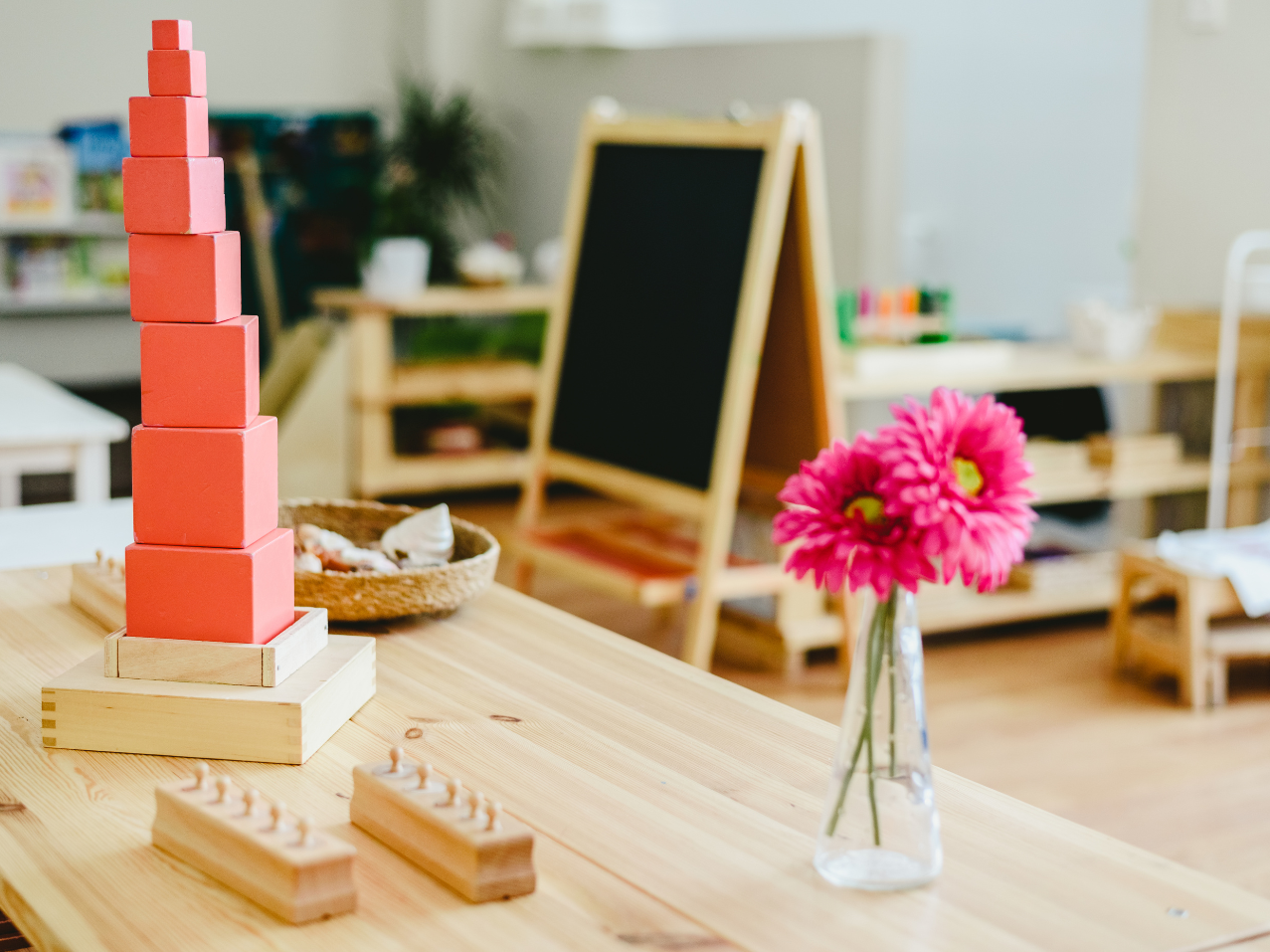

Most elementary school classroom walls are covered in letters, numbers, cartoons, maps… like this one.

But if you’ve ever seen a Montessori classroom, you may have noticed that there is very little posted on the walls, the rugs are solid colours, and the furniture is neutral.
This is because Montessori classrooms are designed to foster concentration.
What you see and don’t see in a Montessori classroom has been carefully selected with this goal in mind.
Montessori classrooms also reduce visual stimulation by how the classroom is organized.
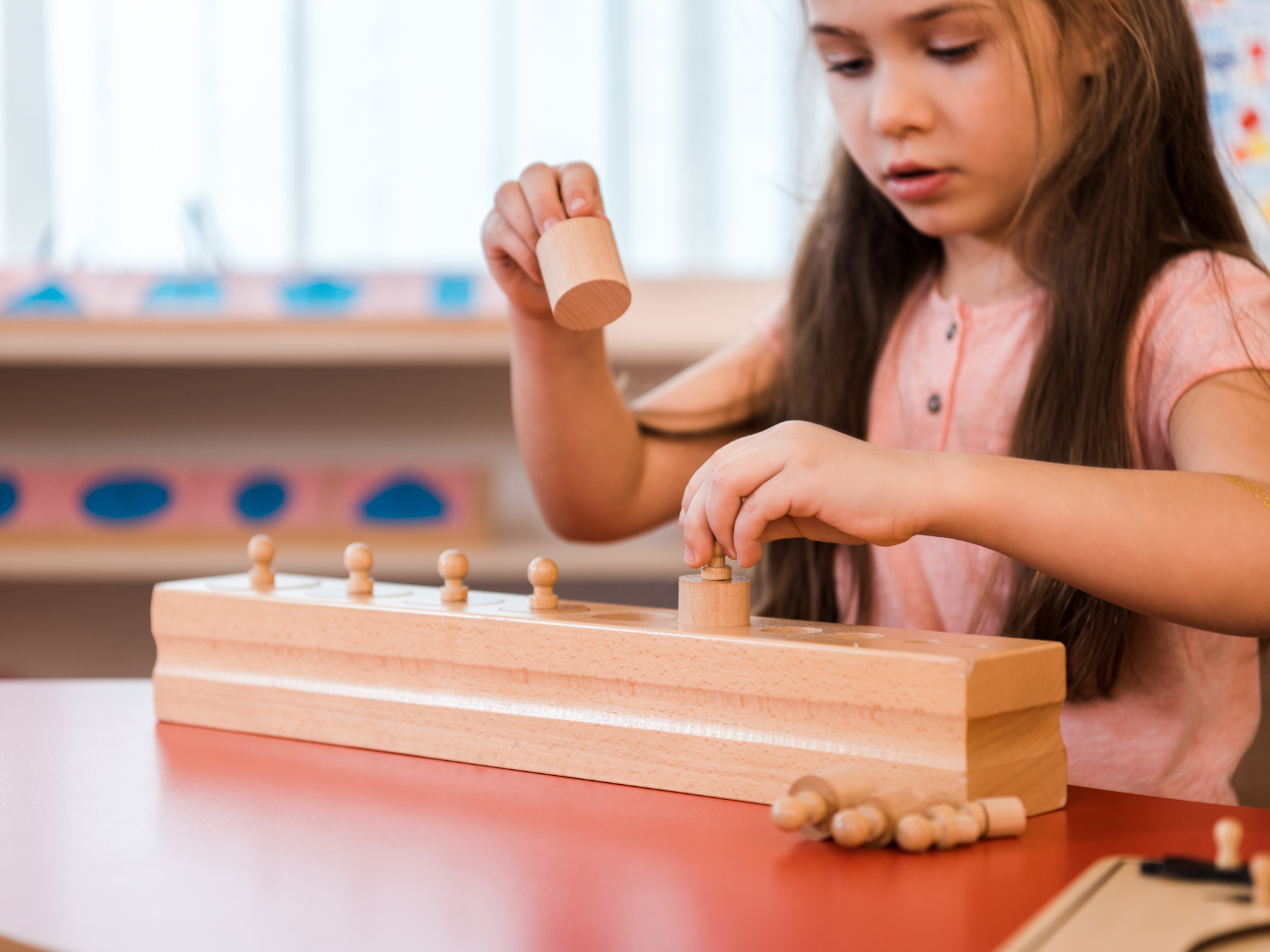
The open shelves with materials organized on trays or in baskets versus unnecessary visual clutter that can happen with large bins of toys or an unorganized play space.
Montessori Classrooms Versus Regular Schools and Daycares
The Montessori perspective on visual stimulation is different than most educational approaches.
Most educational models put more of an emphasis on the benefit of seeing letters, words, numbers, and other forms of print in the environment. The idea is that exposure to these things can support early literacy development.
 And for some children, learning in a room covered in environmental print and visual stimulation isn’t an issue.
But for others - especially those who are more sensitive to distractions in their environment - having a lot of visual information competing for their attention can make it more difficult to focus on the task at hand.
Most Montessori teachers will also tell you that, even though children aren’t surrounded by environmental print, the children in their classrooms are still very interested in letters, numbers, reading, and writing.
The key distinction is the goal of the environment.
While both are designed to support children’s learning, Montessori places a strong emphasis on protecting a child’s concentration.
This isn’t to say that kindergarten or other early learning environments don’t value concentration. It’s simply that their pedagogy places greater emphasis on things like early literacy, which can result in a very different looking classroom.
Reducing Visual Stimulation At Home
When you’re creating a space for your child at home, consider how much visual information you really need to have around them.
The goal is to create a space where your child can concentrate so less is more.
The goal is to create a space where your child can concentrate so less is more.
1. Choose carefully - This doesn’t mean your walls need to be completely bare. Instead, think about whether each item has a purpose and whether it supports what your child is doing in that space. Display family photos, interesting artwork, or other things your child enjoys looking at.
Choose things that enrich the space without becoming the main focal point.
If you’re concerned that keeping the space simple means your child will have less exposure to letters and words, think about all the other ways they encounter them throughout the day. If your child goes for walks around the neighbourhood and has a selection of books at home, they’re already getting lots of exposure to letters, words and environmental print. You don’t need to cover the walls at home to provide these experiences.
2. Limit Availability - Consider rotating toys in the play space so there's not an overwhelming amount of materials available at once.
Finding a balance takes time. The key is to find the sweet spot between calming and engaging.












![Kidamento Kidamento Children's Cameras [3 Models]](http://themontessoriroom.com/cdn/shop/products/kidamento-childrens-cameras-3-models-661353.png?v=1699075281&width=1600)
![Kidamento Kidamento Children's Cameras [3 Models]](http://themontessoriroom.com/cdn/shop/products/kidamento-childrens-cameras-3-models-661353_2000x.png?v=1699075281)

