
How To Teach Children About Germs (in a way that's not scary)
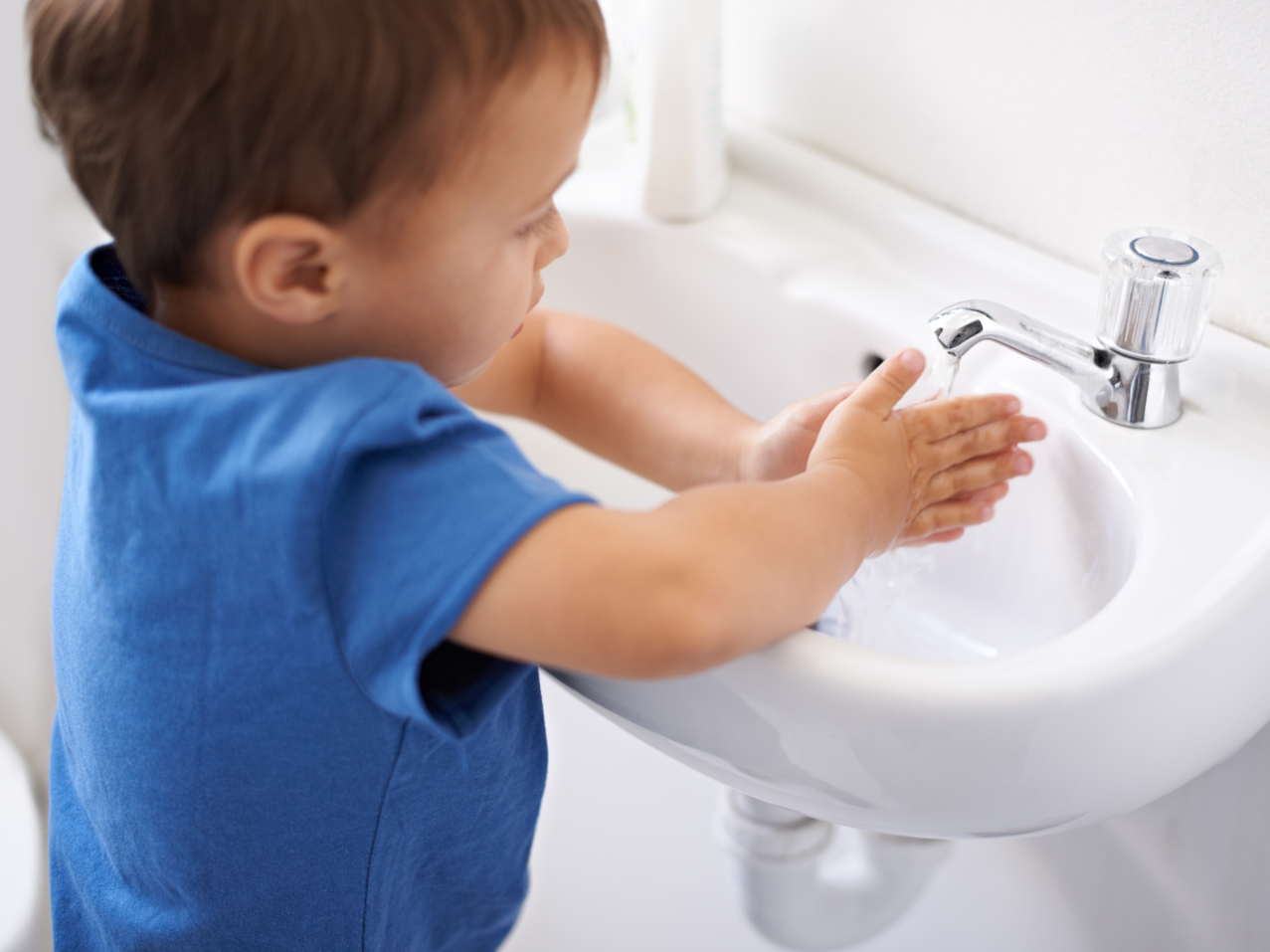

I recently had to have a conversation with my youngest about why he couldn't go to school after throwing up.
Per usual, I was walking the line between too much information (stressing him out) and enough to satisfy his curiosity.
When explaining germs to children, we have to remember that children are highly impressionable. If we portray germs as scary, some children will become fearful of them.
Most children prefer a simple explanation, for example: “Germs are simply tiny little things that can sometimes make us sick.”
For older children, you can explain that germs are actually living things, but you can see how even that information could freak a child out - “tiny living things on my body that I can’t see?!?”
It’s helpful for children to learn how germs are spread so they can better understand why we ask them to cover their coughs, wipe their noses and wash their hands.
Simply explaining, if we cover our cough or sneeze with our hands, the germs will stick to our hands until we wash them, in the same way our hands stay sticky after eating a popsicle.
You can use whatever “sticky” example makes the most sense for your child.
The Glitter Activity
There is an amazing activity you can do to help children’s visualize how germs spread, but it involves glitter...

So only do this if you’re prepared to clean up glitter for the foreseeable future.
Simply sprinkle a little glitter on your child’s hands, then shake hands with them, pass a toy back and forth, or go about a few normal activities together.
Before long, everyone will have "germs," making it easy to see how quickly they can spread from person to person.
Step-By-Step Handwashing Guide
When it comes to handwashing, try to keep the focus positive.
Rather than saying, "Your hands are full of germs," you could say "Let's wash our hands so they're clean for snack."

It can be useful to sing a song (i.e. ABCs, Happy Birthday) or draw the child’s attention to the bubbles they make as they lather to make handwashing feel less like a chore.
Here are step by step instructions on how to introduce handwashing.
Children also learn by watching us. When they see the adults around them washing their hands, covering their coughs and wiping their noses, they begin to see these as normal parts of taking care of themselves and the people around them.
Step-By-Step Guide to Nose Blowing
Books can also be a wonderful way to introduce the topic. One of my favourites is “Germs are Not for Sharing” by Elizabeth Verdick.

Here’s another great blog post on how to teach your child to blow and wipe their nose: https://themontessoriroom.com/
As adults, we have to remember that most things are learned.
A child doesn’t automatically know how to wash their hands or blow their nose.
Our role, is to teach them so don’t overlook these very important lessons.
They’ll make a big difference in helping to minimize germs as your child moves through early childhood.










![Kidamento Kidamento Children's Cameras [3 Models]](http://themontessoriroom.com/cdn/shop/products/kidamento-childrens-cameras-3-models-661353.png?v=1699075281&width=1600)
![Kidamento Kidamento Children's Cameras [3 Models]](http://themontessoriroom.com/cdn/shop/products/kidamento-childrens-cameras-3-models-661353_2000x.png?v=1699075281)

