
5 Rosh Hashanah Activities for Kids
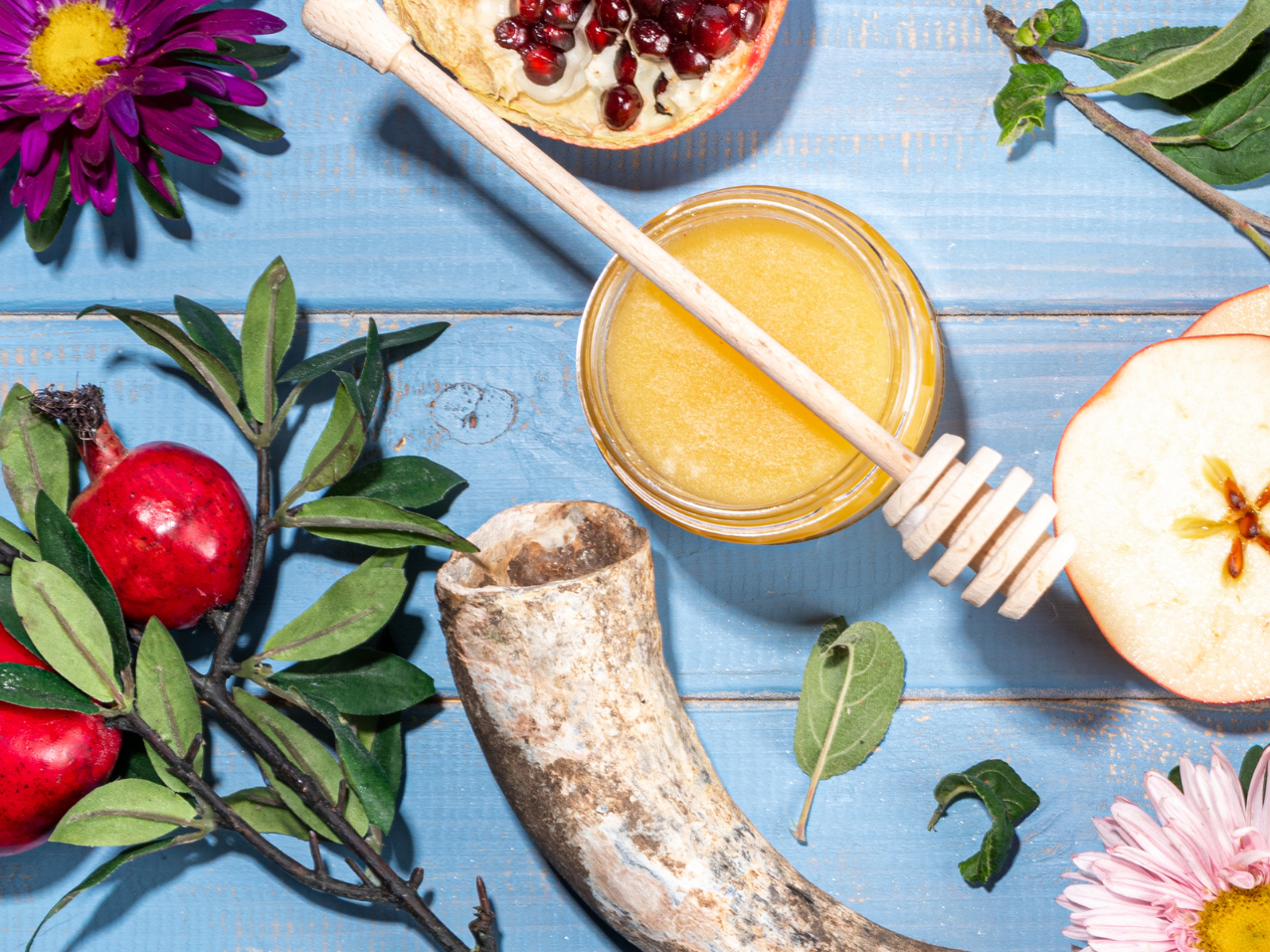

Rosh Hashanah is only a couple of weeks away, beginning on the evening of Friday, September 11th.
And while our family doesn't celebrate Rosh Hashanah, learning about different cultures and religions is one way to help raise anti-racist children, as Britt Hawthorne explains in her book, Raising Antiracist Children.
For other families that don't celebrate, here are a few quick facts to help your family learn more about this holiday:
-
Rosh Hashanah is the Jewish New Year, a special time to celebrate the start of a new year and reflect on the year that has passed. Families think about what went well, what could be improved, and set intentions for the year ahead.
-
The holiday is observed on the first two days of the Jewish New Year and begins at sundown. It usually falls in September or October because the Jewish calendar is lunar-based, following the cycles of the moon rather than the sun. This makes the exact dates change each year on the regular (Gregorian) calendar.
-
Families celebrate by lighting candles in the evenings, sharing festive meals both at night and during the day, and attending prayer services. They also enjoy symbolic foods, like apples dipped in honey, pomegranates, and round challah, each carrying a special meaning: apples and honey for a sweet year, pomegranates for many good deeds, and round challah for the cycle of the year
-
The shofar, a ram’s horn, is blown during the Rosh Hashanah morning prayer service, which includes special prayers and readings to welcome the new year and encourage reflection. Traditionally, the shofar is sounded 100 times during the service, with each note carrying a special meaning.
-
A common greeting on Rosh Hashanah is "Shanah Tovah," which means “Have a good year.”
We also put together some fun crafts, colouring pages, Montessori activities, and an EASY child-friendly recipe.
Activity 1: Make Cards for Friends & Family
A popular activity this time of year is for families to send each other cards, wishing them a "Happy New Year!" or "Shanah Tovah," which means “have a good year.” You can make your own cards and invite the child to decorate them. To include a symbol of Rosh Hashanah, use apples and paint to make apple prints on the front of your card.

Ages: 18 months and up (adults can assist where needed)
Materials:
- Cardstock (or any paper will do)
- Apples - cut in half, down the centre
- Paint
- Paper plate (or plastic container with low sides)
Tip: If the apple is too large for the child to hold comfortably around the edges, use a fork as a handle by sticking it in the back of the apple half.
Steps:
- Fold the paper in half
- Invite the child to make an apple print(s) on the front of the card
- Work together to write a nice message inside, wishing the recipient a Happy New Year and any other well wishes you’d like to send. Older children can write the message independently.
If you’re looking for an even easier activity, click here to download our Rosh Hashanah Card Templates
Activity 2: Rosh Hashanah Language Cards
These Rosh Hashanah language cards are a simple way to introduce young children to the symbols, traditions, and vocabulary associated with the holiday.

Ages: 18 months and up
These cards can be used in different ways, depending on your child’s language development:
- For younger children (18 months +): to build and enrich vocabulary.
- For older children (3 years +): to build vocabulary and support early literacy skills.
We've also included information on the meaning behind each symbol to help make the cards more meaningful, as well as enhance the child’s knowledge of Rosh Hashanah.
Click here to download the Rosh Hashanah Language Cards
Activity 3: Rosh Hashanah Clothespin Cards
These Rosh Hashanah clothespin cards are a simple, hands-on way for children to explore the symbols of the holiday while strengthening fine motor skills and practising matching quantities to number symbols.

Ages: 3 years and up
In a Montessori classroom, an activity like this would be done with clothespins, where the child clips the clothespin over the correct number symbol.
This is a great way to add fine motor development into the activity.
You can also do the activity by simply having your child circle the number with a pencil or marker.
Click here to download the Rosh Hashanah Clothespin Cards
Activity 4: Rosh Hashanah Cutting Work
Rosh Hashanah cutting work gives children an opportunity to strengthen fine motor skills and hand-eye coordination while exploring symbols and images connected to the holiday.

Ages: 3 years and up
These cutting sheets are great because they're less messy than cutting strips that leave lots of little bits of paper.
Children can cut along the dotted line until they reach the object.
Click here to download the Rosh Hashanah Cutting Work
Activity 5: Recipe - Simanim Snack Board
This colourful snack board brings together some of the traditional simanim, or symbolic foods, of Rosh Hashanah. Children can help wash and arrange the fruits and vegetables, scoop and mix dips, and add crackers and other snacks to the board. It’s an easy, hands-on activity that lets children participate in the holiday preparations while learning about the special foods and traditions of Rosh Hashanah.
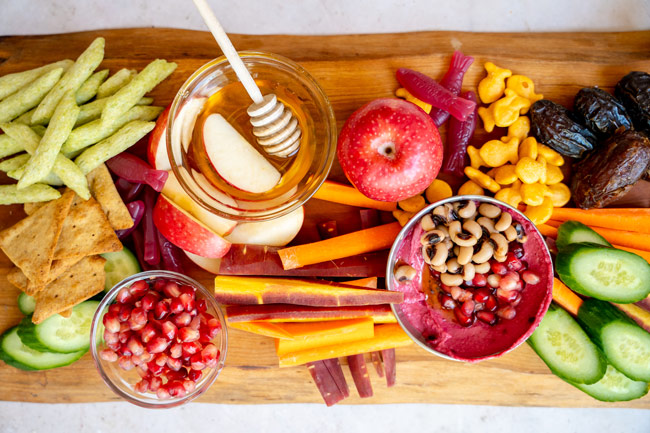
Click here for the Simanim Snack Board Recipe
Other Recipes to try:









![Kidamento Kidamento Children's Cameras [3 Models]](http://themontessoriroom.com/cdn/shop/products/kidamento-childrens-cameras-3-models-661353.png?v=1699075281&width=1600)
![Kidamento Kidamento Children's Cameras [3 Models]](http://themontessoriroom.com/cdn/shop/products/kidamento-childrens-cameras-3-models-661353_2000x.png?v=1699075281)

